Sunday, April 18, 2010

Preparing for the Big One

Lately a number of different natural disasters have made headlines in the news, such as the earthquakes in Haiti and Chile.  This brings into discussion once again the predicted "mega-earthquake" that would occur on the San Andreas fault-line located on the western coast of the United States.  Many people are skeptical of this earthquake, but one town in Oregon is going to be prepared if or when it does occur.  Cannon Beach, Oregon has begun discussions of building a tsunami and earthquake-proof tower for an estimated 4 million dollars.  The tower is based off a similar tower in Japan, and will be able to be a safe-haven for up to 1,000 people.  Although Cannon Beach is leading the way in Earthquake/Tsunami safety, awareness is increasing all along the west coast, with signs of what to do in case of disaster posted everywhere.  Experts predict that there is a 37 percent chance that a major earthquake (8.0 magnitude) will hit the west coast within the next 50 years.  A tsunami that occurred in 1964 knocked out the main bridge in Cannon Beach, and right now experts say the city is not well enough protected.  The tower will hopefully change that.

http://www.nytimes.com/2010/04/15/us/15tsunami.html?ref=science


In Defense of Food


In his non-fiction book, In Defense of Food, Michael Pollan argues that most of the stuff we put into our mouths is not actually food. At least it’s not the food our great, great grandmothers would have recognized as food. Instead of food, we're consuming "edible foodlike substances,” which are produced by food science, rather than nature. Many of them come packaged with health claims, such as “trans-fat free,” that make us think they are healthy, but in reality, are most likely distracting us from the fact that they are actually not healthy. The result is what Michael Pollan calls the American paradox: The more we worry about nutrition, the less healthy we seem to become. To solve this problem, Pollan offers some simple and catchy advice: Eat food. Not too much. Mostly plants. By urging us to once again eat real food, he challenges the popular nutrient-by-nutrient approach, what he calls nutritionism -- and proposes an alternative way of eating that is informed by the traditions of real, unprocessed food. I really enjoyed this book because it is current and relatable. In society today, everyone is looking for the new fad diet that “really works.” Whether it’s Atkins or Jenny Craig, we’re being told that nutrients enrich food, instead of depleting it, which is what Pollan argues. Therefore, it was very interesting and informative to get an alternate perspective. Because, to be honest, Pollan’s simple advice makes much more sense than the crazy dietary rules of the fad-diet companies!

Pompeii Book Review


Pompeii, by Robert Harris, is a fascinating account of the eruption of Mount Vesuvius seen from the perspective of a few citizens from the surrounding towns. The main character is Marcus Attilius Primus, or just Attilius, who is an engineer that is named the new aquarius of Augusta after the previous one goes missing and just in time for the Aqua Augusta to break. Throughout the book, we realize that the Augusta broke down due to the up and coming eruption of Mount Vesuvius, which is unknown to most of the characters until the very end of the book. This book is interspersed with factual accounts of the eruption, but the main story of the book is the slow realisation of Attilius about the eruption and then his frantic tries to save as many people as possible. In this book, we find out much about ancient Roman society (which is eerily similar to our society in regards to its politicians), while experiencing the surprise and horror of the eruption. The most amazing part of this book is Harris' ability to incorporate real historical figures into the book, while still creating an extremely exciting and interesting story about the real life eruption of Mount Vesuvius. I really enjoyed this book, and I would recommend it to anyone who is interested in ancient Roman society, volcanoes and possibly even detective novels because it was similar in that you had to pick up all the clues to figure out what was happening. I give this book 4/5 stars.

Another Eruption in Iceland?


The article I read discussed the fact that the recent eruption of a vent on the volcano Eyjafjallajökul (pronounced AY-ya-fyat-la-yo-kult) could be the least of Iceland's worries. There's another bigger, more dangerous volcano called Katla to the east which scientists have been keeping an eye on. In the past Katla has erupted along with the other or on its own. Katla is said to be more dangerous because it is a lot larger, and because it lies beneath a glacier. If Katla were to erupt, there would be a lot of flooding as the ice is melted by the hot lava. Katla would also cause more ash clouds, which we know are a problem to all the air traffic in many countries. The article also described some of Iceland's past troubles with its volcanoes; Iceland is located above the Mid-Atlantic Ridge, a place prone to volcanic activity. In 1783 and 84 a volcano erupted and spewed out sulfur dioxide and ash, killing thousands of people, and they had a couple of eruptions in the 1960's and 70's. The end of the article did give some good news, as a result of all the ash in the atmosphere people in Europe might be able to see some pretty red sunsets.

http://www.sciencenews.org/view/generic/id/58333/title/Ash_from_Icelandic_eruption_may_just_be_the_start

Friday, April 16, 2010

Giardia


Giardia thrives within intestines of infected humans or animals. One becomes infected through ingesting or coming into contact with contaminated water, food or soil. The Giardia parasite spreads when a person accidently ingests it, this can originate from contaminated items and surfaces that have been tainted by the feces of an infected human or animal. The parasite can also transfer from consuming unsanitary food or water
The symptoms of Giardia include: diarrhea, excess gas, stomach or abdominal cramps, and upset stomach or nausea. This can result in weight loss or dehydration, which can be harmful if not treated immediately. Typical infection within an individual is around 2-6 weeks, but medicine can shorten this time. In rare cases giardia can become a chronic disease.
http://www.webmd.com/a-to-z-guides/giardiasis-topic-overview

Whale Hunting


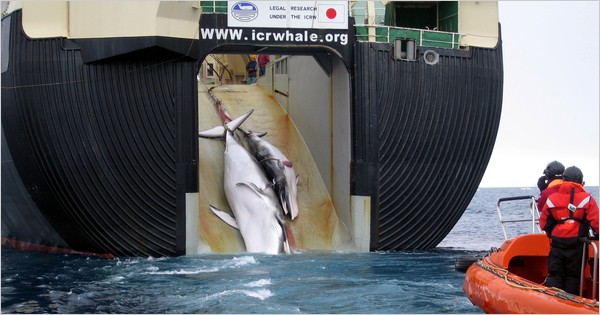
The article I read was about a convention held internationally to discuss regulating and ultimately ending the hunting of whales. Mostly Norway, Iceland and Japan are the countries that are hunting and trading these whales. Many people at the convention wanted to end whale hunting all together, but since that didn't seem like an option, many just opted to try and regulate it more seriously. They said they hoped to bring more respect back to international law and also they wanted to make it so people wouldn't illegally trade these whale anymore. Japan was the nation to most disagree with this idea because they get a lot of money from whale hunting each year. They did succeed in making the laws tighter and all the nations agreed to respect these laws.

Unit Review


Mercury

Mercury is released into the environment through the burning of fossil fuels. Coal is responsible for 87 percent of mercury emissions through oxy-coal combustion. One way factories try to reduce their coal emission is through cleaning the coal.

When inhaled mercury can cause problems in the mouth, lungs and respiratory system. It is said that it's likely to cause cancer in humans. For females the mercury can be harmful for their babies through the breast milk. This would lead to neurological problems.

Boimagnification in the increase in concentration of a substance up the food chain. In result eating larger fish is a greater health risk than eating smaller non predatory fish. The toxic chemicals bioaccumulatre and work their way through a food web.


Water Quality Index:

Chlorine- water additive _>eye/nose irritation, stomach discomfort
Iron- natural sources, corrosion of pipes -> discolored, gross taste
Copper- corrosion of household plumbing systems -> liver or kidney damage
Sulfied- sewage -> salty taste
Silica- sand
pH- corrosion and deposits -> bitter metallic taste
Phosphate- fertilizers, soap/detergents -> interfer with digestion
Nitrate- sewage, fertilizers ->blue baby syndrom, infant death, shortness of breath
Chromium- discharges through steel mills -> allergic dermatis
Ammonia nitrogen- agriculture run-offs, fertilizers -> suffocatoin of babies, blueish skin
Fecal coliform -> bacteria, indicator of other pollutants -> stomach discomfort