Tuesday, April 13, 2010

The Botany of Desire


Who would believe that a flower holds the meaning of life? Or that human history would be so correlated with that of plants? Clearly Michael Pollan did and decided to write The Botany of Desire. The book is divided into 4 parts, each part comparing a human desire to a plant. First, Pollan ties the desire for sweetness to the apple. By chronicling Johnny Appleseed and the spread of the apple around the world, Pollan says humans have long been obsessed with apples. Next, he ties the desire of beauty to the tulip. He chronicles the history of the tulip and how it has always been a sign of power and wealth as well as beauty. Third, he uses the desire of intoxication and ties it to the cannabis plant (marijuana). Pollan looks at the history of marijuana and how the plant has adapted. He notes that only recently the crop began to be altered to grow indoor and outside and to be more potent. Lastly, he looks at the desire for control and ties it to the potato. He says humans desire to alter the potato represents a larger idea that people are in a desperate need to control everything. All of this plays into a larger picture that Pollan is trying to paint; humans and plants are more closely tied than people might believe.

What first felt like a quick read turned into a dense, overly detailed book about an obscure topic. Although there were parts I enjoyed, and I did learn a lot, it was hard not to fall asleep while he described how King Louis XIV felt about tulips. All in all, I would recommend this book to anyone interested in psychology and human development or in botany. Other than that, stay away.

In Defense of Food

Do you ever wonder what all of those ingredients on the back of food packages are, and what they really do?  Michael Pollan sure has, and the answer definitely did not please him, as he voiced in his book, In Defense of Food.  Pollan argues that modern "food" is actually not real food, just a combination of additives and nutrients that look like food.  Science tells us that these additives are good for us, but Pollan does bring up a good point: if we are consuming more nutritious food then ever, why are we not healthier then ever?  He says that nutritionism is to blame, which is giving food only the value of the nutrients it contains.  Food cannot be looked at this way, and clean, untainted food, like the food our ancestors ate, needs to be returned to modern society.  I personally do not agree with Pollan and his theory, because in my opinion, if the nutrients are proven to be healthy, then it does not matter what form they take (what type of food) they will always be healthy.  This book, is really just giving another diet, only clean, REAL food, just backed up with science.  Dieters and scientists, this is a must read.

indefense.jpg

Pompeii Book Review


I originally chose this book because I was always interested in roman culture and I also was interested in volcanoes but I knew virtually nothing about the eruption of Vesuvius. The story of the eruption is not the whole book; it’s framed by the story of a young Aquarius. He is the engineer that is responsible for the aqueduct. The main chunk of the book is the water from the aqueduct stops flowing and the towns are left without water. His mission is to fix it. Along the way he has to deal with corrupt government officials, angry Romans and a little bit of forbidden love had to make its way into it at some point. All the while Vesuvius is trying to do everything in its power to warm everyone what is coming. I do recommend this book in the end. I would change some things, but overall I enjoyed it. If you choose to read this, read it because you’re interested in roman culture, and also make sure you have some time because it’s not a short read.

Monday, April 12, 2010

Free Trade


In our modern economy, money trumps environmental responsibility. In order to change this, the Convention on Trade in Endangered Species of Wild Fauna and Flora (CITES) takes place every few years. The purpose is to take endangered species and place them on lists that prevent the trade of these animals. This year, the meeting in Doha failed to make substantial changes to animal trade. Because there were so many purposed animals, countries sent their top negotiators to make sure their economies were not effected. Japan turned out 30 strong to battle the conservationists. For example, 80% of blue fin tuna is consumed in Japan. Because of this, Japan made sure that blue fin tuna, although endangered, was kept off the no trade list. The European Union was also responsible for blocking legislation. Sharks were also kept off the most protected list. CITES kept a ban on elephant trading in Africa, but other than that, it was not a productive convention. Hopefully by their next meeting in 2013, they will be able to put their economic greed aside and take a stand on animal trade.

http://www.economist.com/science-technology/displaystory.cfm?story_id=15767253

Sunday, April 11, 2010

Pompeii

Pompeii is a book about the massive eruption of Mt. Vesuvius in Italy. It ties in to what we learned first semester with volcanoes, and is extremely interesting. Robert Harris uses fictional characters to depict what life was like before the explosion, leading up to the day of the eruption. I would suggest this book to anyone who likes to read books with excitement and having to do with history.

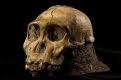
2,000,000 year old ancestor


Recent discoveries in South Africa of a human skeleton lead researchers to believe that species unknown until this discovery could have existed during the transition of the ape-like Australopithecus species to "the early members of the genus Homo". In Johannesburg, South Africa two skeletons, a juvenile male and and adult female, were discovered dating from almost 2,000,000 years ago. As the skeletons were completed they concluded that these skeletons are far too advanced for the average Australopithecus, but are also not as physically mature as any species in the Homo genus. This new species of hominid is named Australopithecus sebida and they are currently searching the grounds of Johannesburg for more insight into this interesting new species.

http://images.google.com/imgres?imgurl=http://images.tanea.gr/dGenesis/assets/Content5/Photo/1123997_b.jpg&imgrefurl=http://www.tanea.gr/default.asp%3Fpid%3D41%26nid%3D1123997&usg=__2YCvTrw2RRwbZGFPUjTNjOHMFkQ=&h=238&w=358&sz=9&hl=en&start=1&sig2=pVD-jUoFIRzah1yJN8l5Nw&um=1&itbs=1&tbnid=_ZDeV4ESy5loXM:&tbnh=80&tbnw=121&prev=/images%3Fq%3Daustralopithecus%2Bsebida%26um%3D1%26hl%3Den%26client%3Dsafari%26sa%3DN%26rls%3Den%26tbs%3Disch:1&ei=lGvCS76NOor9ngejvsH2CA

Botany of Desire


I read The Botany of Desire by Michael Pollan. What caught my eye about this book was simply in the title, The Botany of Desire: A Plant's Eye View of The World. This book contains viewpoints from both humans and plants, and even insight into animals' minds as well. Pollan's book contains detailed descriptions of the history of four different plants' lives on this Earth: the apple, the tulip, marijuana, and the potato. Pollan shares his own experiences and observations of these plants and their affects on the world. He describes their "life story", how they have been changed or mutated from their natural state, what their significance is to humans and animals, and how that significance has changed over time.
Pollan starts by describing the life of an apple. He tells the story of John Chapman, commonly known as Johnny Appleseed, and how he spread the growth of apple trees to the midwest. Pollan describes how an apple possesses a natural sweetness that humans and animals crave at birth. He then explains how the tulip represents beauty. The tulip can achieve many levels of beauty that humans have desired for centuries. Next is Marijuana. Marijuana is a form of intoxication that humans crave. All humans, whether consciously or subconsciously, feel the need to be intoxicated and experience a different state of mind and marijuana fulfills that craving. Lastly, Pollan describes how the mutations and modifications humans have made on potatoes reflect our constant need to be in control. Over time, we have found a way to control every genetic aspect of the growth of potatoes so that we can grow them exactly how we want them.
I enjoyed reading this book for the most part, but there were a few aspects that I could have done without. The extreme detail seemed almost unnecessary to get his ideas across. Also, some parts were difficult to get into and I had a hard time grasping some of the ideas. If you are up for a detailed read about the lives of plants, then I strongly suggest this book because despite my complaints, it is very well written.